


This is an outline of my current Masters Thesis Studio…
Twin themes of the commons as a place and a practice, and archaeology as a material method of storytelling, inform how architecture might critically mediate between contested histories, ecological imperatives, and community aspirations.
Geelong on Wadawurrung Country is Victoria’s second city. On the edges of the old Town Common, long built over and re-built over and all but forgotten, where city gives way to landscape, where industrial sheds give way to swamp and Country gives way to nothing, we will ask: how do we build on this periphery and others like it?
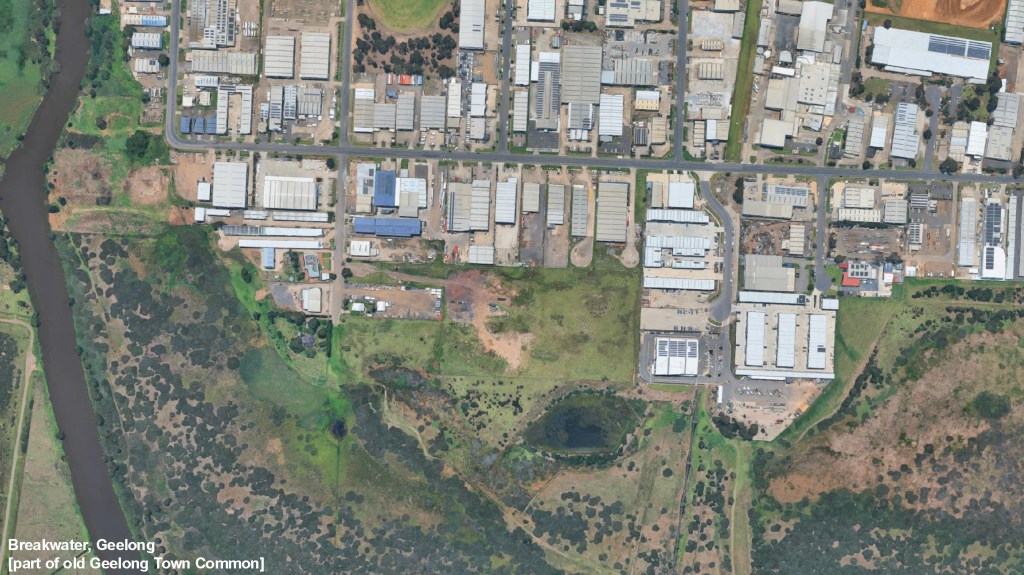
This peri-urban palimpsest with all entangled layers always in play makes available a range of possible programmes related to: memory and heritage, community and cultural commons, ecological and environmental restoration, experimental practices in place-making, urban commons and public infrastructure.
We will explore how:
- The commons are able to creatively disrupt hierarchies of ownership and stewardship.
- Architecture, like archaeology, operates as a profoundly ‘situated’ practice.
- Interdisciplinary practice between architecture and archaeology reveals the porous and productive boundary between designing new environments and interpreting those already there.
- As architects we don’t (usually) make buildings, we make representations of buildings, and those representations are meaningful in their own right.

The brief:
Design a building or group of buildings on Wadawurrung Country, which responds to ideas of the commons, and/or practices of archaeology and is situated at or near the junction of Tanner Street and Breakwater Swamp in Geelong.
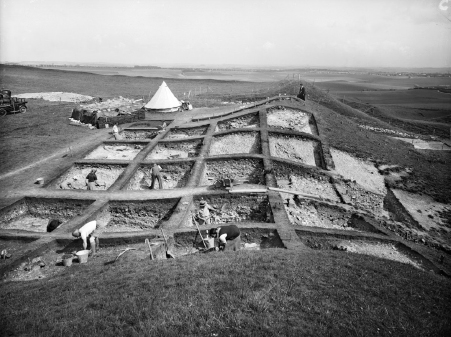
Grid excavations at Maiden Castle (UK) directed by Sir Mortimer Wheeler, 1937.

 Scandalous Artefacts