

Bringing my commons research into the Australian context has been exciting and, at least at first, baffling. Many things which look familiar turn out not to be, and some things which I took for granted are either complex or they don’t exist at all.
I am writing a general paper on common land in Australia as well as another on the old town common of Geelong. At some point there will be another on the common at Ballarat and later this year I plan to bid for some funding for a big Australian commons project. This brief general intro I wrote recently – with particular reference to Ballarat Common – gives a flavour of all of this.
Australia once had a vast network of ‘commons,’ – subsistence land set aside for all settler-colonists to use – a vital resource for early farming and, later, mining communities. Yet by the early 1900’s most (but not all) had disappeared: sold off, built over, or subsumed into other types of green space.

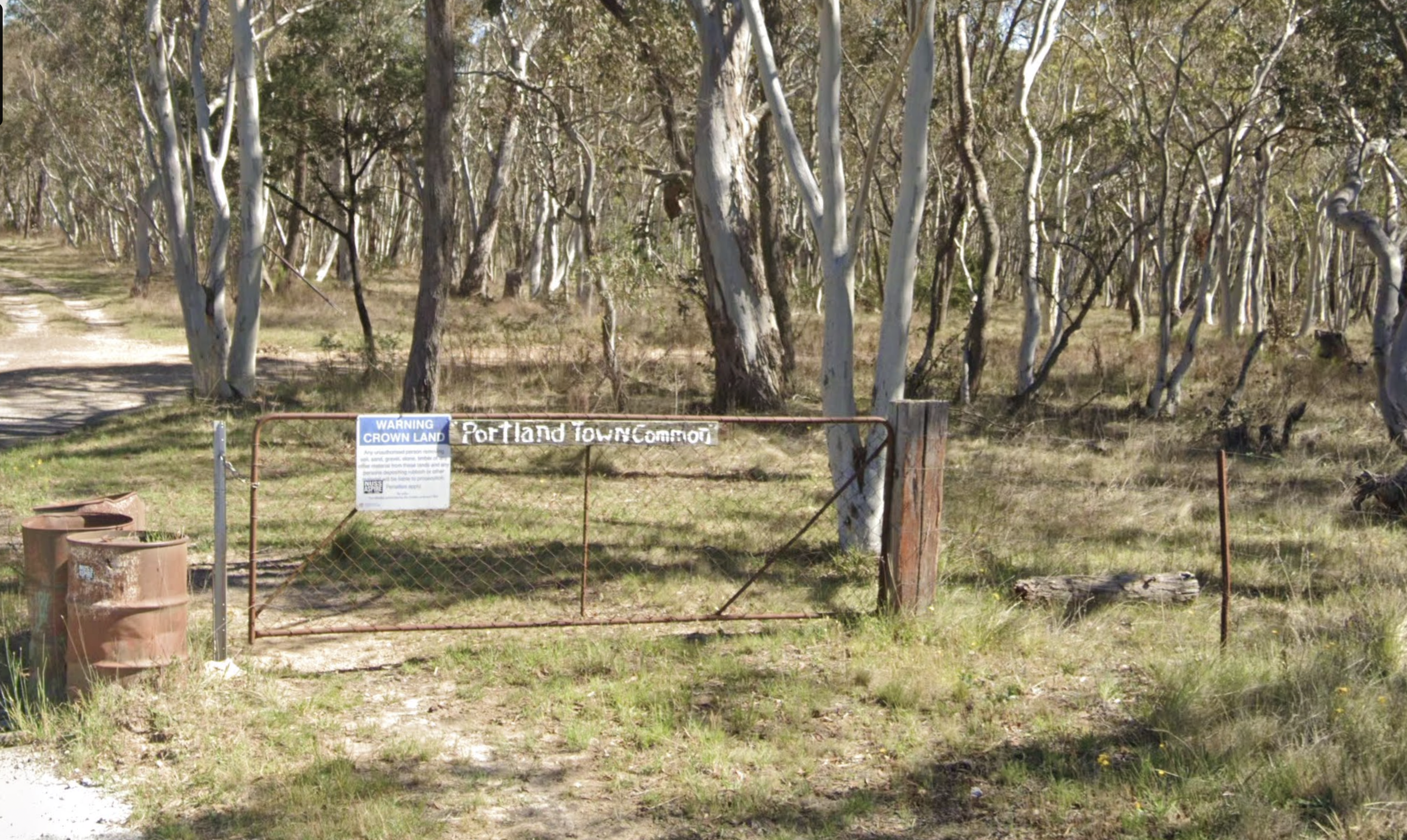
Portland Town Common, NSW, Australia. Image: Google Street View, Dec 2023
Just like all other land subject to colonial legal structures – eg crown land, freehold land – land that became ‘common’ in this way was stolen from First Nations peoples. Yet the origins of common land lie in ideas of community and spatial justice and intense connection to land. One of the great legal challenges in Australia is how to reconcile colonial land ownership structures and lived First Nations notions of Country, and one of the great urban and architectural challenges is how to build in this context.
What if we understood where the idea of common land came from; the sensibilities which formed it and in places still linger? Might this knowledge help us to either reinvigorate, dismantle or subvert it for the benefit of all?
Not even the oldest inhabitant remembers where they were…
Ballarat Common was formed, as so many commons were, in about 1861, but unlike others lasted until at least 2014 (Melbourne too had its own, now lost, town common).[1] Indeed, some parts of these intriguing peri-urban green open spaces may still be legally common. Ballarat has a post-colonial history of political dissent resulting, some have argued, in contributing to a particularly Australian sense of nationhood. This may be connected to the survival of its common.
[1] In 1947 The Herald announced: “Mystery Solved Of Two More Commons. Not only has the mystery of Wandool—Ararat’s lost common—been cleared up […] but: Today’s Government Gazette proclaims that the Governor […] has been pleased to abolish the Melbourne town common (proclaimed 1863) and the Hawthorn town common (1861). Not even the oldest inhabitant remembers where they were…”

 Scandalous Artefacts